
Published July 11, 2026
Someone May Be Trying to Sell Your Land Without You Knowing It

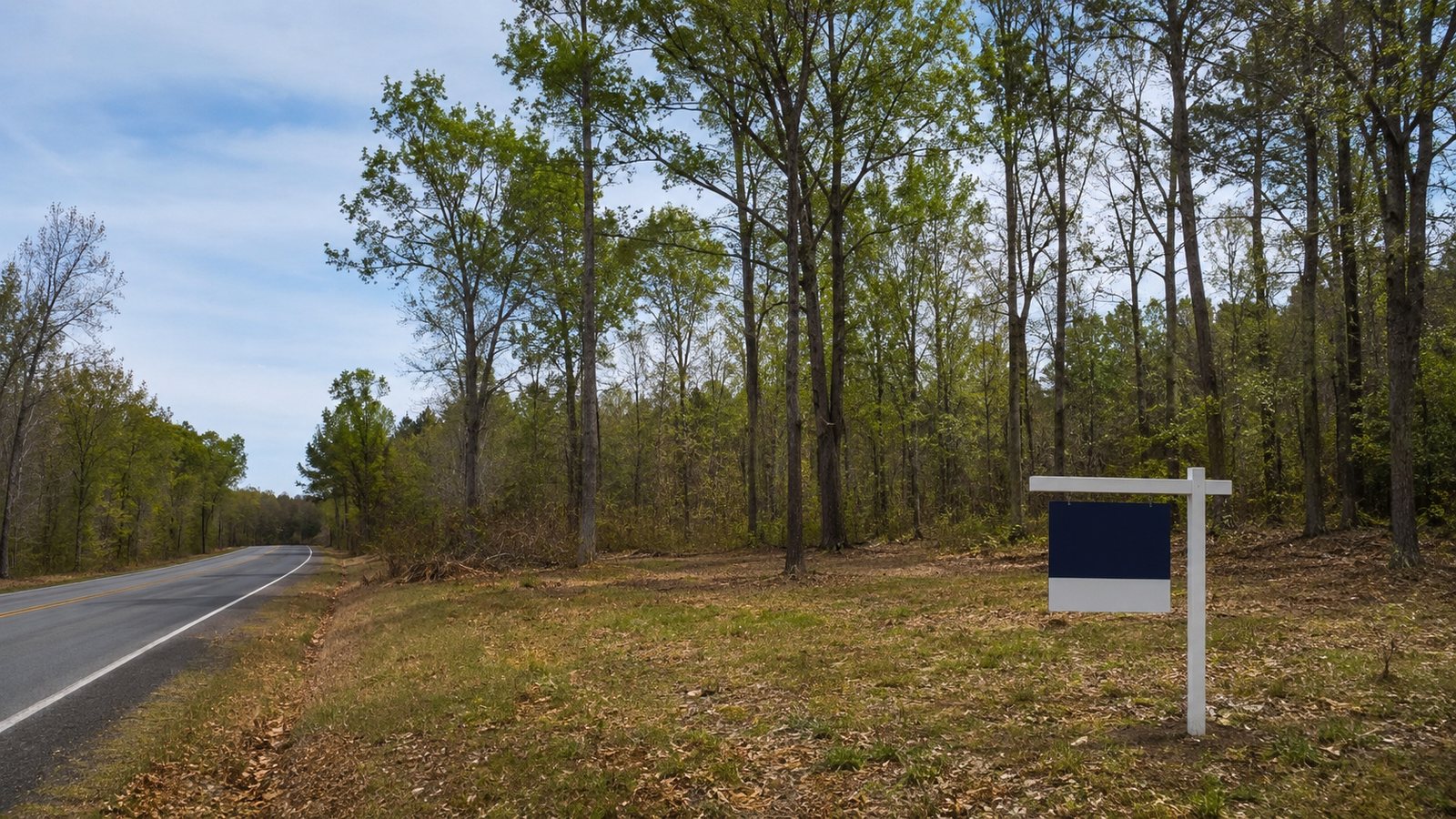
Someone May Be Trying to Sell Your Land Without You Knowing It
By Dawn Riley, Associate Broker, Realtor, MCNE, PSA
Someone May Be Trying to Sell Your Land Without You Knowing It
Imagine owning a piece of land in Maryland. Perhaps you inherited it, purchased it as an investment, or kept it after moving to another state.
The property is vacant. There is no house, tenant, mortgage company, or neighbor regularly watching it.
Then someone you have never met contacts a local real estate agent, claims to be you, lists your property for sale, accepts an offer, and attempts to collect the proceeds.
You may not know anything is happening until you see a real estate sign, receive a call from a concerned neighbor, or discover that documents involving your property have been recorded.
This is not a hypothetical concern.
The FBI issued a public warning in June 2026 about criminals impersonating vacant-property owners and attempting to sell their land without their knowledge or consent. These criminals may use fabricated identification, newly created email accounts, internet-based phone numbers, and information gathered from public records to appear legitimate.
As a Maryland Associate Broker and Realtor, I see the attempted beginning of this scam far more often than most property owners would expect.
My team and I receive at least one email nearly every week from someone claiming to be an out-of-state owner who wants to sell vacant land.
Some inquiries are legitimate. Many are not.
The challenge is knowing the difference before the property reaches the market.
How Vacant-Land Seller Impersonation Works
The scam usually begins with public information.
Property ownership records can identify the owner, mailing address, property location, assessed value, and other basic information. Maryland's Department of Assessments and Taxation provides a public Real Property Data Search for informational purposes.
That transparency serves an important public purpose. But it also gives criminals enough information to begin building a convincing story.
The scammer may look for:
-
Vacant or unimproved land
-
Property owned free and clear of a mortgage
-
An owner whose mailing address is in another state
-
Land owned by an older adult, estate, trust, corporation, or limited liability company
-
Property that appears to receive little activity or oversight
-
Land located in a rural or lightly populated area
The scammer then creates an email address using the owner's name and contacts one or more local real estate agents.
The message often sounds simple:
"I own a parcel in your area and would like to sell it. I live out of state. Can you tell me what it is worth?"
That is not an unusual request. Real estate agents regularly work with remote property owners.
The scam succeeds because it is designed to look like an ordinary real estate lead.
Why Vacant Land Is an Attractive Target
A house creates natural opportunities to verify ownership.
The agent may meet the seller at the property. Personal belongings may be inside. Neighbors may recognize the owner. The seller may have utility records, repair invoices, mortgage statements, insurance documents, keys, access codes, and detailed knowledge of the home.
Vacant land is different.
There may be no building to enter, no utilities, no occupants, and no obvious person to question. A remote seller may have a believable reason for never visiting the property.
The FBI has also noted that all-cash transactions can involve fewer outside parties than financed purchases. That can reduce the number of people reviewing the transaction and make a rushed sale easier to complete.
Technology makes the situation more complicated. Remote signatures, electronic contracts, video meetings, mobile notaries, and email communication are now normal parts of real estate.
Those tools make legitimate transactions more convenient. They also give a criminal more ways to avoid meeting anyone in person.
The Fake Seller Usually Knows the Basics
A common mistake is assuming the scammer will know nothing about the property.
Many scammers have already researched it.
They may know:
-
The owner's legal name
-
The tax-record mailing address
-
The acreage
-
The property account number
-
The date the owner purchased it
-
The assessed value
-
The name shown on the deed
-
Whether the property appears to have a mortgage
-
The names of family members or business associates
They may even provide a driver's license bearing the real owner's name.
The FBI warns that criminals are creating fake driver's licenses and passports as part of these schemes. A copy of an identification document may therefore be helpful, but it should never be treated as conclusive proof that the person is the owner.
Identity verification must involve more than checking whether the name on an ID matches the name in the tax record.
The Question That Often Catches Them Off Guard
One of the documents I request is the seller's most recent property-tax bill.
This question regularly changes the conversation.
A legitimate owner may need time to locate the bill, especially if the property has been owned for years. But the owner normally understands what I am requesting and can explain how the taxes are handled.
A fraudulent seller may become defensive, avoid the question, send an unrelated public record, or suddenly stop responding.
Why does the request work?
The scammer is usually prepared to provide a fake ID. That is part of the plan. The scammer may not be prepared to produce supporting documents connected to the owner's actual history with the property.
Maryland Realtors recommends requesting documents that a real owner would be more likely to possess, including a tax bill, utility bill, prior settlement statement, title policy, or survey.
But there is an important distinction.
A Tax Bill Is a Verification Tool, Not Proof of Identity
Some property-tax information can be viewed online. For example, St. Mary's County allows tax accounts to be searched by account number, name, or address.
A determined scammer may be able to locate public tax information or recreate a document.
That means a tax bill should be one part of a larger verification process.
I am not simply looking for a document with the correct name printed on it. I am looking for consistency among the tax bill, identification, mailing address, ownership history, signatures, contact information, property knowledge, and the seller's explanation of how and when the property was acquired.
One document can be fabricated. Creating an entire consistent ownership history is much harder.
Red Flags That Deserve a Closer Look
No single warning sign proves that a person is committing fraud. There are legitimate reasons why a seller may live out of state, prefer electronic communication, or need a quick sale.
The concern increases when several warning signs appear together.
The Seller Communicates Only Through Text or Email
The person avoids phone calls, refuses to participate in a video meeting, or always has a reason why direct communication is impossible.
Maryland Realtors identifies a refusal to communicate by phone or video as a potential warning sign.
The Seller Wants to Move Unusually Fast
The person pushes for an immediate listing, a quick contract, and a rapid closing.
A real owner may have a legitimate deadline. But speed can also be used to discourage careful review.
The Seller Accepts a Price Below Market Value
Most legitimate sellers want to understand what their land is worth.
A scammer is not concerned about preserving the owner's equity. The scammer is focused on obtaining money before the fraud is detected.
The FBI warns that fraudulent sellers may agree to sell below market value to speed up the transaction.
The Seller Readily Agrees to Every Term
There is little discussion about commission, closing expenses, contingencies, settlement timing, or the net proceeds.
A person pretending to own the land may not care whether the agreement is financially favorable. Any amount collected from the fraudulent sale is a gain to the criminal.
The Seller Knows Very Little About the Property
The person cannot answer questions about access, boundaries, surveys, taxes, perc testing, neighboring properties, easements, prior offers, family ownership, or why the property was purchased.
Not every owner knows every detail. But the answers should make sense in the context of the owner's history.
The Phone Number Does Not Connect to the Owner
A reverse search may show an unrelated person, an internet-based phone service, or no reliable history.
Internet-based phone numbers are not automatically fraudulent. Many legitimate people use them. But the result should prompt additional verification.
The Mailing Address Does Not Make Sense
The seller claims to live in one location, the identification shows another, the tax records show a third, and the requested destination for the sale proceeds is somewhere else.
Each discrepancy may have a reasonable explanation. The seller should be able to provide it.
The Seller Wants to Choose the Remote Notary
The seller initially agrees to attend settlement, then becomes unavailable and wants to sign remotely through a notary selected by the seller.
Maryland Realtors lists this last-minute change as a warning sign, particularly when combined with other suspicious behavior.
The Proceeds Are Being Wired to an Unrelated Party
The seller asks for the money to be sent to another person, an attorney in an unrelated state, a business with a different name, or a foreign account.
The FBI specifically warns about sale proceeds being directed to an account under a different name or in a location with no apparent connection to the property.
Why a Driver's License Is Not Enough
Requesting government-issued identification is still an important step. It simply cannot be the only step.
A fake ID can include:
-
The actual owner's name
-
The owner's current or previous address
-
A photograph of the scammer
-
A fabricated license number
-
A copied signature
-
A realistic design based on a genuine state license
The name and address may match public records perfectly because the scammer obtained the information from those records.
A careful real estate professional should look beyond the surface.
Questions should include:
-
Does the ID appear current and valid?
-
Does the address match other records?
-
Does the photograph match the person on a live video call?
-
Does the signature resemble previously recorded documents?
-
Does the seller know details about the property's history?
-
Can the seller produce documents that were not easily found online?
-
Does the seller's phone and email history make sense?
-
Can the seller receive correspondence at the tax-record mailing address?
Maryland Realtors recommends comparing the signature on the ID with documents in the land records when possible and involving a trusted title company in that review.
The Verification Process Should Have Several Layers
Fraud prevention is not about finding one perfect document.
It is about creating enough independent points of verification that an impersonator cannot easily pass all of them.
1. Review the Maryland Property Records
Confirm the owner's name, mailing address, property description, acquisition information, and how title is currently held.
Public tax records are a starting point. They are not a substitute for a professional title examination.
2. Request Current Government-Issued Identification
Review the name, photograph, expiration date, address, and signature.
Do not assume the ID is genuine simply because it looks professional.
3. Hold a Live Video Call
Ask the person to appear on camera with the identification.
During the conversation, ask property-specific questions naturally. The purpose is not to interrogate a legitimate client. It is to confirm that the person's knowledge and identity are consistent.
Maryland Realtors recommends treating an unexplained refusal to participate in a video call as a warning sign.
4. Request Supporting Ownership Documents
Examples may include:
-
The most recent tax bill
-
The prior settlement statement
-
The owner's title insurance policy
-
A survey
-
A prior appraisal
-
Perc-test documentation
-
Well or septic records
-
Utility records
-
An insurance document
-
Correspondence from the county
-
Documents connected to an estate, trust, or business entity
The appropriate documents depend on the type and history of the property.
5. Send a Letter to the Address of Record
A confirmation letter can be mailed to the owner at the tax-record address. The letter should explain that the property is being considered for sale and ask the owner to contact the agent directly.
Both the FBI and Maryland Realtors recommend contacting the owner through the address shown in the official records rather than relying solely on the contact information supplied by the purported seller.
6. Verify the Business Entity
If an LLC, corporation, trust, or estate owns the property, confirm that the person has legal authority to act for that entity.
The name of a company representative in an email is not enough. The agent and title company should review the appropriate organizational or estate documents.
7. Involve a Trusted Maryland Title Company Early
The title company should not be brought into the transaction only after a contract is signed.
Experienced title professionals may detect conflicting signatures, questionable deeds, suspicious notary information, unusual payoff instructions, ownership problems, or wire instructions that do not match the seller.
8. Reverify Before Money Is Transferred
Identity verification should not stop when the listing agreement is signed.
The parties should remain alert through contract negotiations, settlement-document execution, and the transfer of funds.
A last-minute request to change wiring instructions, pay a third party, or use a different notary deserves immediate scrutiny.
What Can Happen If the Fraud Is Not Stopped?
Seller impersonation fraud can harm nearly everyone involved.
The Actual Owner
The owner may face forged documents, a cloud on the title, legal expenses, and the burden of proving that the transfer was unauthorized.
The FBI warns that fraudulent deeds and transfers can force the rightful owner to take legal action to recover or clear the property.
The Buyer
The buyer may pay for land that the supposed seller had no legal authority to convey.
Even if the buyer acted honestly, the buyer may become involved in a title dispute and could lose access to the property while the ownership issues are resolved.
The Real Estate Agents and Brokers
The agents may face financial loss, legal claims, regulatory complaints, reputational damage, and a substantial amount of time spent assisting investigators and affected parties.
The Title and Settlement Company
The title company may confront forged documents, fraudulent notarizations, misdirected funds, and insurance claims.
The Community
Construction, financing, resale, and property-tax records can all be disrupted when ownership is disputed.
This is why identity verification is not unnecessary red tape. It protects the legitimate owner, buyer, agents, brokerage, title company, and integrity of the public land records.
How Out-of-State Landowners Can Protect Their Property
Owners of vacant land should not assume that no activity means there is no risk.
A few habits can make suspicious activity easier to detect.
Check the Public Records Periodically
Review the ownership and mailing-address information associated with your property. Make sure the county has your current address.
Watch for Missing Tax Notices
A missing tax bill does not automatically indicate fraud. But owners should investigate if expected property-related correspondence suddenly stops.
The FBI advises property owners to take action if they stop receiving property-tax or utility bills.
Ask a Neighbor to Watch the Property
A nearby owner may notice a real estate sign, survey crew, clearing activity, heavy equipment, or unfamiliar people visiting the parcel.
Visit the Property When Possible
Out-of-state owners may also hire a local professional to check the land periodically.
Create an Online Alert for the Property Address
An alert may notify you when the address appears in a listing, advertisement, or other online content.
Maryland Realtors recommends that owners and agents consider alerts for properties and active listings.
Ask Whether Your Jurisdiction Offers Recording Alerts
Some county recording offices provide notifications when a document involving a person's name or property is recorded.
Availability and enrollment procedures vary by jurisdiction. The FBI recommends checking with the local land-records or clerk's office.
Keep Important Ownership Documents
Retain copies of your deed, settlement statement, title policy, surveys, tax records, estate documents, and business records.
Secure documents make it easier to verify your ownership if questions arise.
Review Your Title Insurance Policy
Coverage depends on the policy and the facts of the claim.
The FBI recommends reviewing the owner's title policy and asking the issuing company whether it includes protection related to forgery or post-policy events.
What Should You Do If Your Land Is Listed Without Permission?
Act quickly.
Contact the listing brokerage and clearly state that you are the owner and did not authorize the listing.
Then contact:
-
The real estate brokerage
-
The multiple listing service, when applicable
-
The title or settlement company
-
The local land-records office
-
A Maryland real estate attorney
-
Your title insurance company
-
Local law enforcement
-
The FBI's Internet Crime Complaint Center
Preserve emails, text messages, contracts, identification documents, phone numbers, wire instructions, online advertisements, and other evidence.
Do not rely on a verbal assurance that the listing has been removed. Confirm what documents have been signed, whether a contract exists, whether settlement has occurred, and whether anything has been recorded in the land records.
Frequently Asked Questions
Can Someone Really Sell My Vacant Land Without My Knowledge?
A criminal can attempt to impersonate you, sign fraudulent documents, list the property, and direct the proceeds to an account under the criminal's control.
Whether a fraudulent transaction creates a valid transfer is a legal question that depends on the documents and circumstances. Even when the owner ultimately retains legal ownership, forged documents can create expensive and time-consuming title problems.
Why Are Out-of-State Owners Targeted?
Distance makes it easier for a criminal to explain why the seller cannot meet the agent, visit the property, or attend closing.
Out-of-state ownership also means the legitimate owner may be less likely to see a real estate sign or notice activity on the land.
Is a Copy of the Seller's Driver's License Enough?
No.
It is an important document, but identification can be altered or fabricated. The FBI specifically warns that criminals may create fake driver's licenses and passports when impersonating landowners.
Why Do You Request the Most Recent Tax Bill?
The request adds another point of verification and often tests whether the person has a genuine history with the property.
But a tax bill is not absolute proof of ownership or identity. Some tax information is publicly available. It should be reviewed along with identification, title information, signatures, contact details, a video call, and other ownership documents.
What If the Seller Has a Legitimate Reason for Not Having the Tax Bill?
That alone does not mean the seller is fraudulent.
The seller may pay online, use an accountant, have taxes handled through a business, or simply have misplaced the document. The explanation and the other supporting information should be evaluated together.
Should Every Remote Landowner Be Treated as Suspicious?
No.
Many legitimate landowners live outside Maryland, inherit property, hold land as an investment, or conduct transactions remotely.
Good verification procedures should protect legitimate clients without treating them like criminals. The same consistent process should apply to everyone.
Can Title Insurance Protect a Property Owner?
It may provide protection in certain forgery or title-related situations, but policies and coverage vary.
Property owners should contact their title insurance company or a Maryland real estate attorney for advice about a specific policy or suspected fraudulent transfer.
Should I Accept an Unsolicited Offer for My Vacant Land?
An unsolicited offer is not automatically fraudulent. Investors and builders regularly contact landowners.
Before signing anything, independently verify the buyer, understand the property's market value, review its development potential, and speak with a qualified real estate professional or attorney.
Careful Verification Protects Everyone
Fraud prevention does not begin at the settlement table.
It begins with the first email.
When someone contacts me claiming to own vacant land, I do not rely on a matching name, a polished email, or a photograph of a driver's license.
I look for a consistent story supported by independent records and documents.
And yes, I ask for the most recent property-tax bill.
That request often catches an impersonator off guard. But it is only one part of the process.
The best protection comes from slowing the transaction down, verifying the owner through several independent methods, involving a trusted title company, and refusing to ignore inconsistencies simply because the seller is eager to move forward.
After more than 25 years in Maryland real estate, I have learned that protecting a client's property sometimes means asking one more question, requesting one more document, and taking the time to confirm that the person asking to sell the land actually owns it.
If you own vacant land in Calvert County, St. Mary's County, Anne Arundel County, or elsewhere in Southern Maryland and have concerns about an unsolicited inquiry, suspicious listing, or possible sale, contact Dawn Riley at 410-414-2438.
This article provides general real estate information and is not legal advice. Property owners facing suspected fraud should consult a qualified Maryland attorney and the appropriate law-enforcement agencies.
Sources and Further Reading
-
FBI Internet Crime Complaint Center, Criminals Impersonating Property Owners to Illegally Sell Commercial and Residential Properties: https://www.ic3.gov/PSA/2026/PSA260616
-
Maryland Department of Assessments and Taxation, Real Property Data Search: https://sdat.dat.maryland.gov/RealProperty/Pages/default.aspx
-
FBI Newark, Fraudsters Are Stealing Land Out From Under Owners: https://www.fbi.gov/contact-us/field-offices/newark/news/fraudsters-are-stealing-land-out-from-under-owners
-
Maryland Realtors, Seller Impersonation Scam Warning and Prevention Guide: https://www.mdrealtor.org/Portals/22/adam/Content/qg1Jn5p3h0il3pS-sBPQqw/Link/Seller%20Scam%20Flyer.pdf
-
St. Mary's County Treasurer, Property Tax Information: https://www.stmaryscountymd.gov/treasurer/taxes/
-
FBI Boston, Quit Claim Deed Fraud Is on the Rise: https://www.fbi.gov/contact-us/field-offices/boston/news/fbi-boston-warns-quit-claim-deed-fraud-is-on-the-rise-