
Published September 29, 2026
Before the Pool Becomes the Selling Point, Verify the Equipment and Safety

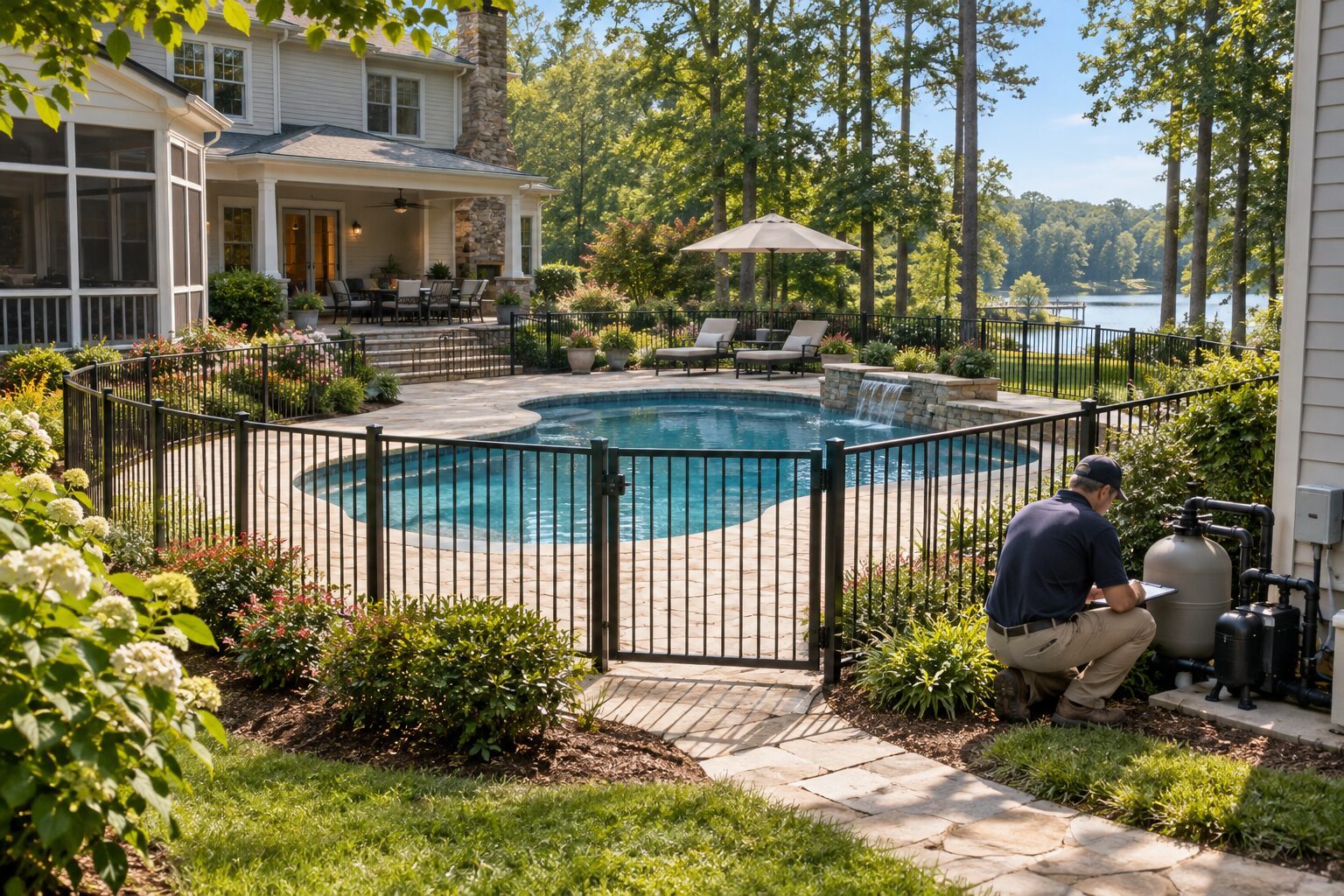
In Southern Maryland, many pool sales occur when water is winterized, covered or difficult to test. Salt exposure, tree debris, drainage, sloped lots and aging decks may create costs that are not obvious in listing photographs. A specialized pool inspection should be coordinated with the general inspection and contract deadline.
Start With the Choice the Client Must Make
A swimming pool may add lifestyle appeal, but it is also a mechanical system, safety responsibility and ongoing expense. Buyers and owners should verify permits, barriers, equipment, structure, seasonal condition and insurance before treating the pool as a simple feature. For The Riley Team, the client’s decision sets the research order. We identify the controlling source, then establish when that answer is needed.
Assemble the Evidence Before Discussing Terms
- County permit, inspection and final-approval records for the pool and electrical work
- Pool installer records, plans and equipment manuals
- Service invoices, opening and closing records and recent water-care logs
- Barrier, gate, alarm and cover information
- Pump, filter, heater, liner, plaster and salt-system age or warranty records
- Insurance declarations and any prior claim or repair information
One organized file gives everyone the same factual starting point. An item remains unresolved until the responsible source provides it.
Practical Clues Worth Investigating
- No permit or final inspection may be located for a permanent pool
- Gate hardware, barrier openings or door access appear unsafe
- The pool is covered and the owner cannot document recent operation
- Water loss, cracks, staining or lifting deck sections are visible
- Electrical bonding, lighting or equipment wiring looks improvised
- A heater, automatic cover or salt system is advertised without service history
Purchaser’s Action Plan
- Order a pool inspection from a qualified specialist within the contract period.
- Confirm permit and final-inspection history with the County.
- Ask an insurance producer about coverage, liability and required barriers.
- Price routine care, electricity, opening, closing and major component replacement.
- Define how a closed or winterized pool will be represented and tested.
- Inspect the pool area again at walkthrough and obtain keys, remotes and manuals.
Owner’s Preparation Plan
- Locate permit records and disclose known defects accurately.
- Service the equipment and correct obvious safety concerns before listing.
- Document component ages, warranties and seasonal maintenance.
- Explain winterization without guaranteeing unseen condition.
- Prepare a list of included equipment, chemicals, covers and accessories.
- Set realistic showing and inspection access rules for the pool area.
The Riley Team’s Contract Approach
Dawn separates verified operation from seasonal uncertainty. She coordinates the pool specialist, County, insurer, lender and title company, then writes any repair or escrow agreement around a defined component, dollar amount, completion standard and deadline. A general credit is not presented as proof that the pool is safe or fully functional.
An Owings home is listed in February with a covered in-ground pool. The purchaser does not accept “worked last summer” as a substitute for evidence. Dawn obtains service records, County permit history and an inspection plan that addresses what may be tested while closed. The parties negotiate a narrow escrow tied to professional opening and defined release terms, subject to lender and title approval.
Questions Southern Maryland Clients Ask
Should a purchaser hire a separate pool inspector?
Yes. A general home inspection may provide observations, but a pool specialist may evaluate the vessel, visible structure, circulation, filtration, heater, controls and safety equipment within the agreed scope.
Under what circumstances may a covered winter pool be fully inspected?
Often not. The inspector should state what could and could not be tested. The parties may then decide whether records, an opening, an escrow or acceptance of uncertainty is appropriate.
How do I verify a Calvert County pool permit?
Contact Calvert County Inspections and Permits with the home or parcel address and available records. Ask about the permit, required inspections and final status rather than relying only on the owner’s recollection.
Will homeowners insurance cover any pool?
Coverage and underwriting vary. A purchaser should disclose the pool, diving board, slide, fence and other features to the insurance producer and obtain home or parcel-specific confirmation.
When does a pool automatically increase appraised value by its cost?
No. Appraisers analyze market evidence and condition. Installation cost, purchaser preference and contributory value are different concepts.
Who pays to open a pool for inspection?
That is a negotiable transaction detail. Put the cost, timing, responsible contractor, access and winterization responsibility in writing.
What records matter most to a owner?
Permits, final inspections, installer information, component ages, repair invoices, service logs and warranties help a purchaser distinguish documented condition from assumptions.
Under what circumstances may a pool problem be handled with a closing credit?
Possibly, subject to lender limits and agreement. A credit does not correct an unsafe barrier, create a permit or prove equipment condition, so the remedy must fit the issue.
Should the purchaser test for a pool leak?
Discuss observed water loss or suspected leakage with the pool specialist. Leak detection may be a separate service and may require operating conditions not available during every inspection.
What should happen at the final walkthrough?
Confirm the agreed condition, included accessories, safety barriers, equipment presence and completion records. A walkthrough is not a substitute for the earlier inspection.
Related RileyTeam.net Real Estate Guides
- Which Maryland Contract Dates Need Immediate Calendar Reminders?
- A VA Appraisal Is Not Your Home Inspection: What Military Buyers Should Schedule
- What Does a Home Warranty Actually Cover After Settlement?
- Is the Deed Still Correct? A Maryland Property-Record Safety Check
- Moving Out of Maryland? Check Seller Withholding Before You List
- Will Your Home Sale Be Taxable? Build the Basis File Before Closing
- Can You Sell a Maryland Rental While the Tenant Still Lives There?
- A Neutral Real Estate Plan for Selling the House During Divorce
- How Does a Reverse Mortgage Get Paid Off When the Home Sells?
For more about Dawn Riley’s experience and negotiation background, visit DawnRiley.net.
Sources Cited
- Calvert County, Inspections and Permits
- U.S. Consumer Product Safety Commission, Pool Safely
- CDC, residential pool and swimming safety
- Maryland REALTORS, property inspection forms
General real estate information only. Consult the appropriate legal, lending, tax, insurance, engineering or other licensed professional for the home or parcel.