
Published September 29, 2026
Can This Property Support an Accessory Apartment or Backyard Cottage?

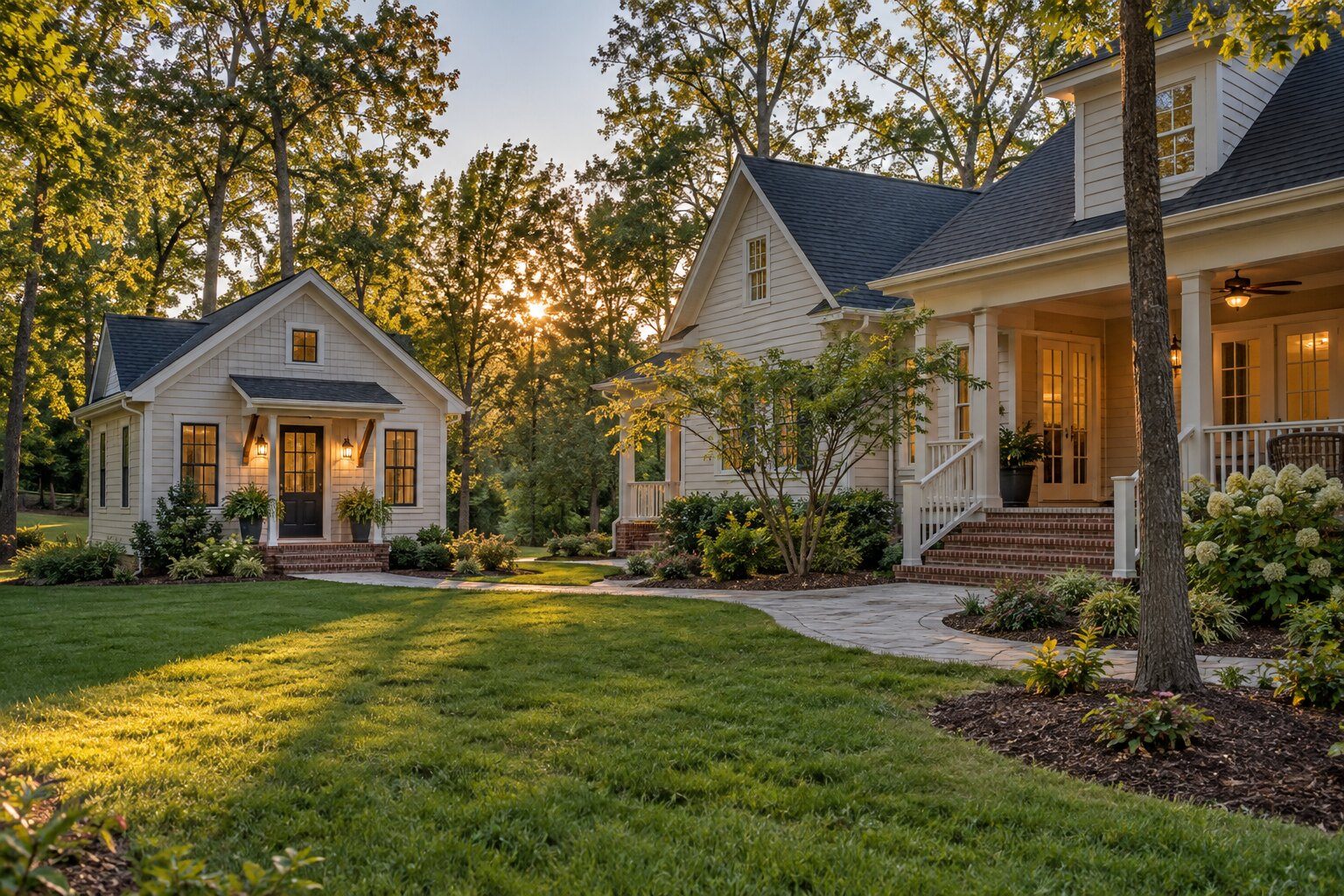
Calvert County defines an accessory apartment as a second dwelling unit within or added to a single-family detached dwelling, or in a separate accessory structure on the same lot. The County’s current permit page identifies building, grading, water or sewer and other approvals that may apply. A general real estate agent may organize the inquiry but cannot promise zoning approval.
Start With the Choice the Client Must Make
An accessory apartment may support multigenerational living, caregiving, rental income or flexible space, but a detached cottage, basement suite and room over a garage are not automatically legal dwelling units. Zoning, ownership, size, setbacks, parking, water, sewer, septic, grading, building and rental rules must be verified for the specific parcel. For The Riley Team, the client’s decision sets the research order. We identify the controlling source, then establish when that answer is needed.
Assemble the Evidence Before Discussing Terms
- Current zoning designation, parcel map and applicable accessory-apartment standards
- Building, grading, electrical, plumbing, mechanical and use-and-occupancy permits
- Approved floor plans, site plan, setbacks, parking and entrance details
- Well yield, septic capacity, reserve area and health department approvals
- Recorded restrictive covenants, HOA rules and any rental license or occupancy records
- Utility bills, separate-meter information, leases and income records if the unit already exists
One organized file gives everyone the same factual starting point. An item remains unresolved until the responsible source provides it.
Practical Clues Worth Investigating
- A second kitchen exists but no accessory-apartment approval may be found
- The advertised bedroom count exceeds septic records
- A detached unit sits in a setback, Critical Area or septic reserve area
- The owner assumes a family member may occupy space that is not approved as a dwelling
- Rental income is used for affordability before the lender accepts it
- An addition has permits for storage or recreation but is marketed as an apartment
Purchaser’s Action Plan
- Describe the intended occupant, rental plan, size and alterations in writing.
- Verify zoning and permit history directly with the County.
- Review septic, well, parking, access and fire-safety requirements.
- Ask the lender and appraiser whether existing or proposed income may be considered.
- Obtain contractor and design estimates only after the allowed scope is understood.
- Keep approval uncertainty inside the due-diligence and financing decision.
Owner’s Preparation Plan
- Gather every permit, approved plan and final inspection for the unit.
- Correct marketing that overstates legal use, bedroom count or rental eligibility.
- Provide leases, income and utility records only with appropriate context.
- Resolve open permits, code notices and septic questions before listing when practical.
- Separate finished space value from guaranteed apartment or income value.
- Disclose known limitations and let the County, lender and appraiser make their own decisions.
The Riley Team’s Contract Approach
Dawn turns the purchaser’s goal into a records checklist and agency questions. An offer should not assume approval merely because a similar unit exists nearby. For an existing unit, she asks for permits and final inspections. For a proposed unit, she makes clear that feasibility, cost and timing require County, health, design, lender and insurance input.
A Prince Frederick purchaser wants a detached cottage for an aging parent and future rental. The lot appears large enough, but the septic reserve area and setbacks overlap the preferred location. Dawn obtains the zoning and health records before the purchaser pays for full plans. The design team then studies an attached option that may fit the parcel better, subject to County approval.
Questions Southern Maryland Clients Ask
How should a purchaser understand an accessory apartment in Calvert County?
The County describes it as a second dwelling unit within or added to a single-family detached dwelling, or in a separate accessory structure on the same lot. Specific standards and permits still apply.
Is an ADU the same as a guesthouse?
Not necessarily. Labels used in conversation or marketing do not control legal use. Cooking, sleeping, sanitation, occupancy and rental plans may change how the County classifies the space.
Under what circumstances may every single-family lot have an accessory apartment?
No assumption is safe. Zoning district, lot conditions, setbacks, water, sewer, septic, Critical Area and other rules must be checked for the parcel.
When does a detached ADU require a grading permit?
Calvert County’s accessory-apartment page states that attached or detached accessory apartments require a grading permit, with stormwater requirements. Verify the current project-specific process.
Under what circumstances may the existing septic system support another dwelling unit?
Only the health records and approving authority may answer. Bedroom count, flow, reserve area and system condition may limit the proposal.
Under what circumstances may rent from an ADU help a purchaser qualify?
Possibly, under the lender’s program and appraisal requirements. Do not include proposed income in affordability until the lender accepts the legal unit and documentation.
When does HOA approval replace County approval?
No. Private covenants and government approvals are separate. A project may need both, and either may affect feasibility.
Under what circumstances may an unpermitted apartment be legalized after purchase?
Sometimes a path exists, but it may require plans, inspections, upgrades, septic approval or removal. Obtain County and professional guidance before assuming cost or outcome.
How should an existing unit be marketed?
Describe only the legal, permitted and documented use. Avoid guaranteeing rental income, occupancy or approval beyond the available evidence.
What should a purchaser verify before making an offer?
Verify zoning, permits, final inspections, septic or utility capacity, covenants, insurance and lender treatment, then compare the intended use with the actual evidence.
Related RileyTeam.net Real Estate Guides
- Is This 1974 Rambler Modular or a Pre-HUD Mobile Home?
- Who Can Sign the Contract When a Maryland Estate Sells a Home?
- Should You Test a Southern Maryland Home for Radon Before Closing?
- Does the Fence Follow the Property Line? A Survey Checklist
- Who Repairs the Road? Private-Lane Questions Before You Buy
- A Flood Zone Is Only the Start: Documents Waterfront Buyers Need
- Is That Heating-Oil Tank Safe, Documented, and Insurable?
- The Appraisal Came In Low: What Evidence Belongs in an ROV?
- Termites, Carpenter Bees, or Old Damage? Read the WDI Report Carefully
For more about Dawn Riley’s experience and negotiation background, visit DawnRiley.net.
Sources Cited
- Calvert County, accessory apartment permit guide
- Calvert County, permit types
- Calvert County, Planning and Zoning
- Fannie Mae Selling Guide, accessory dwelling units
General real estate information only. Consult the appropriate legal, lending, tax, insurance, engineering or other licensed professional for the home or parcel.