
Published September 29, 2026
Should You Test a Southern Maryland Home for Radon Before Closing?

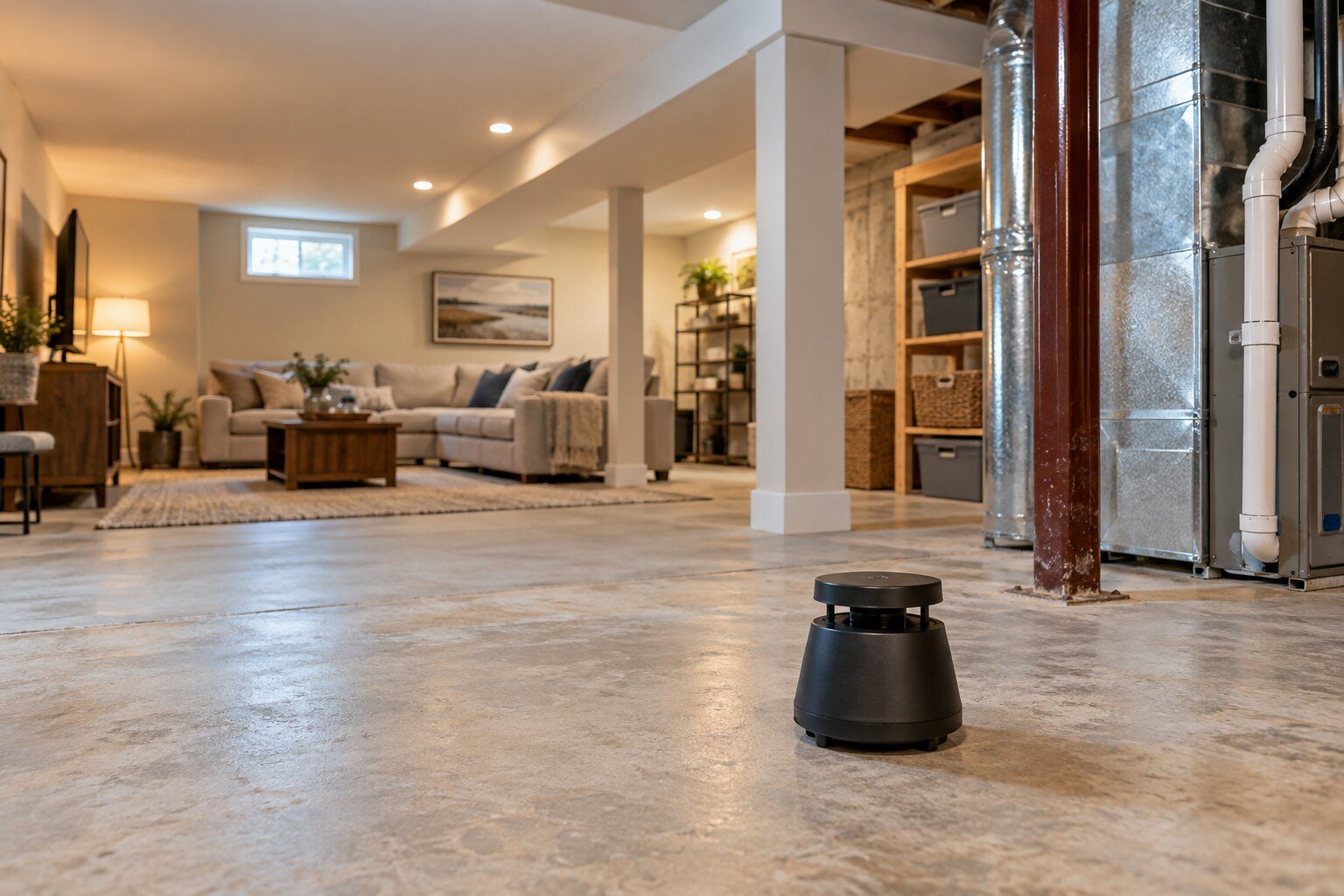
Calvert County homes include basements, crawlspaces, slab sections, additions and mixed foundation types. Those features affect test placement and mitigation design. Maryland health guidance points to the EPA action level of 4 picocuries per liter, while the testing professional, mitigation contractor and purchaser’s medical or environmental advisers answer different questions.
Start With the Choice the Client Must Make
Radon is an invisible, odorless radioactive gas that may enter a home from the ground. The only way to know the measured level is to test under appropriate conditions. A real estate test is a time-sensitive sample, not a permanent guarantee, so purchasers need a plan for placement, closed-house conditions, result evaluate, mitigation and post-work verification. For The Riley Team, the client’s decision sets the research order. We identify the controlling source, then establish when that answer is needed.
Assemble the Evidence Before Discussing Terms
- Test device type, serial number, placement diagram, start and stop times and chain-of-custody information
- Laboratory or continuous-monitor report with measured result and quality-control notes
- Written testing protocol, closed-house instructions and any observed interference
- Mitigation proposal showing fan, suction points, vent routing, electrical work and discharge location
- Post-mitigation test result and system warranty, monitor or maintenance instructions
- Prior radon tests, mitigation permits or invoices and any owner disclosure information
One organized file gives everyone the same factual starting point. An item remains unresolved until the responsible source provides it.
Practical Clues Worth Investigating
- Windows or exterior doors are left open during a short-term test
- The device is moved, covered or placed beside a draft, sump or dehumidifier
- A result near or above the action level is dismissed without professional evaluate
- A contractor proposes a system without evaluating the actual foundation configuration
- The contract deadline expires before the result or mitigation bid arrives
- The parties agree to money but never define post-mitigation testing and completion evidence
Purchaser’s Action Plan
- Order the test promptly through a qualified provider and follow the protocol.
- Confirm which lowest lived-in or potentially occupied level will be tested.
- Keep proof of placement, timing, conditions and any device alerts.
- Discuss the result with the testing professional rather than rounding it into a simple pass or fail.
- If mitigation is negotiated, require a defined scope, licensed electrical work where applicable and post-work testing.
- Retest periodically after occupancy and after major structural or HVAC changes as health authorities recommend.
Owner’s Preparation Plan
- Do not interfere with the device or closed-house instructions.
- Provide prior tests and mitigation records accurately.
- Keep the testing area accessible and explain operating sump or ventilation equipment.
- Obtain a reputable mitigation proposal if a result warrants action.
- Negotiate the scope, contractor, payment and verification instead of promising a result no one may guarantee.
- Transfer system instructions and warranties at settlement.
The Riley Team’s Contract Approach
Dawn treats the laboratory result, mitigation scope and contract remedy as separate steps. A credit may be appropriate when the purchaser wants control, but it does not prove that a future system will meet a target. A owner-completed system needs contractor qualifications, access, electrical details, post-work testing and a deadline. The chosen remedy must leave the purchaser with usable evidence.
A Dunkirk purchaser orders a short-term radon test immediately after ratification. The result is above 4 pCi/L. Dawn does not diagnose health risk or select a system herself. She obtains a mitigation proposal from a qualified contractor, confirms the purchaser’s response deadline, and negotiates a completed system with a post-mitigation test and transferable documentation before settlement.
Questions Southern Maryland Clients Ask
What level of radon should concern a purchaser?
EPA recommends fixing a home at 4 pCi/L or higher and considering action between 2 and 4 pCi/L. Discuss the actual result, test quality and health questions with qualified professionals.
Under what circumstances may you smell or see radon?
No. Radon is invisible and odorless. Testing is the practical way to measure the level in the home during the test period.
Where should a real estate radon test be placed?
Placement depends on the home and protocol, generally in the lowest level suitable for occupancy and away from drafts, exterior walls and interfering equipment. The testing professional should document the location.
What are closed-house conditions?
They are testing conditions intended to limit unusual air exchange before and during a short-term test. Follow the provider’s written instructions for doors, windows and normal operation of approved systems.
Under what circumstances may a owner stay in the home during testing?
Usually, if normal entry and exit continue and the protocol is followed. Occupants must not move the device or change ventilation in ways that invalidate the test.
When does one low test mean the home will always be low?
No. Radon levels may vary with weather, seasons and building changes. Health agencies recommend periodic retesting and testing after mitigation or major renovations.
When does a high result mean a purchaser should cancel?
Not automatically. Radon may often be mitigated. A purchaser should evaluate the result, contractor plan, cost, timing and personal risk tolerance within the contract rights.
Who should install a mitigation system?
Use a qualified radon mitigation professional and properly licensed trades for electrical or structural work. The contractor should evaluate the foundation and provide a written design and warranty.
Should the system be retested after installation?
Yes. A post-mitigation test helps verify the measured result after the system is operating. Keep the report and system instructions for future owners.
Under what circumstances may Dawn interpret the medical effect of a radon result?
No. Dawn organizes testing, deadlines and negotiation. Health questions belong to medical or public-health professionals, and system design belongs to qualified radon contractors.
Related RileyTeam.net Real Estate Guides
- Is This 1974 Rambler Modular or a Pre-HUD Mobile Home?
- Who Can Sign the Contract When a Maryland Estate Sells a Home?
- Does the Fence Follow the Property Line? A Survey Checklist
- Who Repairs the Road? Private-Lane Questions Before You Buy
- A Flood Zone Is Only the Start: Documents Waterfront Buyers Need
- Can This Property Support an Accessory Apartment or Backyard Cottage?
- Is That Heating-Oil Tank Safe, Documented, and Insurable?
- The Appraisal Came In Low: What Evidence Belongs in an ROV?
- Termites, Carpenter Bees, or Old Damage? Read the WDI Report Carefully
For more about Dawn Riley’s experience and negotiation background, visit DawnRiley.net.
Sources Cited
- Maryland Department of the Environment, radon safety
- Maryland Department of Health, radon information
- U.S. EPA, radon guide for home buyers and sellers
- U.S. EPA, consumer guide to radon reduction
General real estate information only. Consult the appropriate legal, lending, tax, insurance, engineering or other licensed professional for the home or parcel.