
Published September 29, 2026
Is This 1974 Rambler Modular or a Pre-HUD Mobile Home?

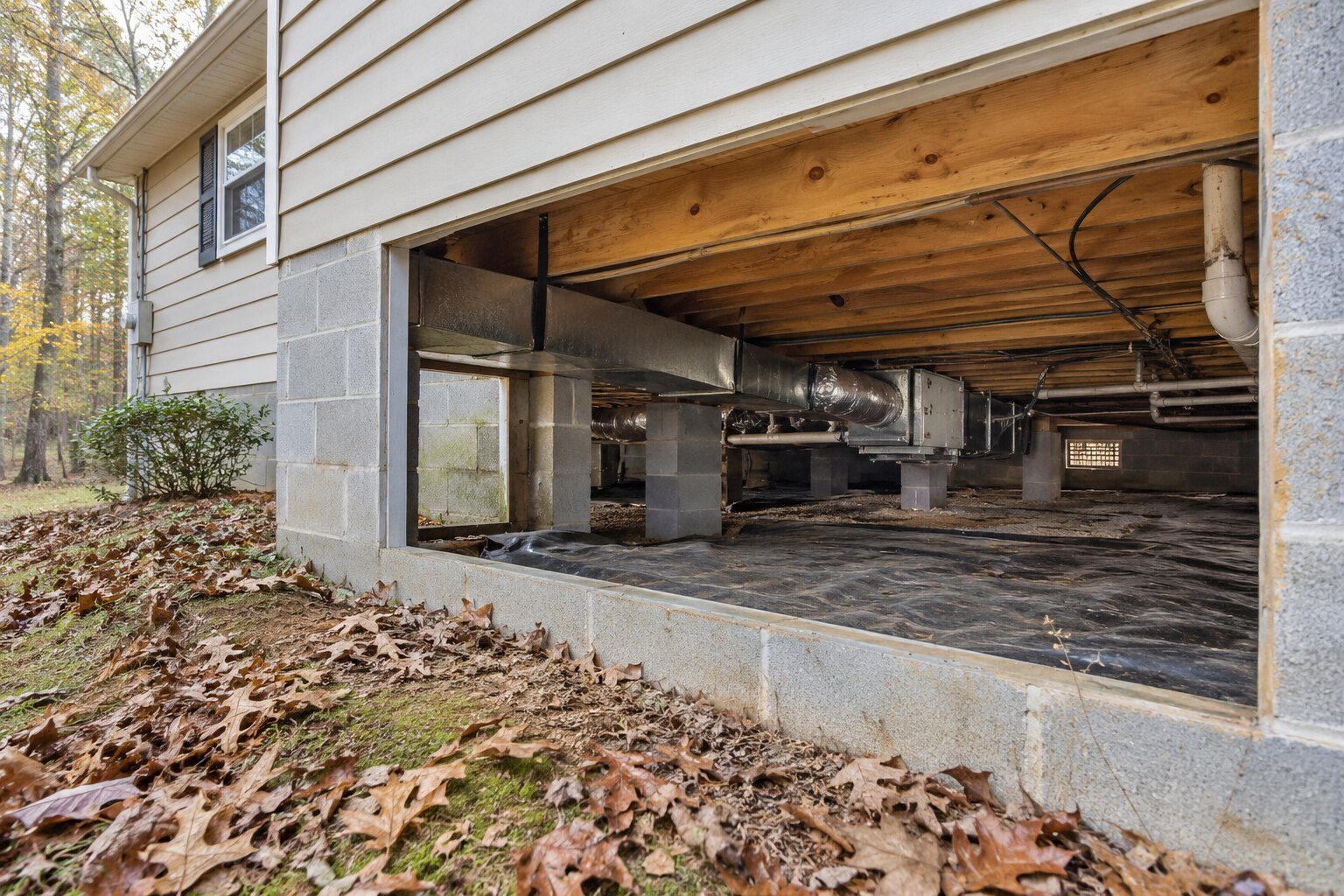
A block foundation is useful evidence but not proof of modular construction. A conventional loan reported in May 2024 does not bind a new lender or establish type. An HVAC brand may date later equipment but cannot classify the original dwelling. The crawlspace may reveal a steel chassis, crossmembers, hitch remnants, marriage-line framing, modular floor framing or later support work; those observations still must be reconciled with permits, Maryland insignia or manufacturer records, title records and the prior appraisal.
Start With the Choice the Client Must Make
A pre-1976 mobile home and a Maryland-regulated modular home may look similar after renovations, but they are different construction categories. That distinction may change financing, appraisal, insurance, title treatment and resale. Because this Huntingtown home is reported as built in 1974, before federal HUD standards and certification labels took effect on June 15, 1976, the absence of a HUD tag would not decide the question. For The Riley Team, the client’s decision sets the research order. We identify the controlling source, then establish when that answer is needed.
Assemble the Evidence Before Discussing Terms
- Original Calvert County building, installation, electrical, plumbing, septic and occupancy permits, including plans and inspection notes
- The May 2024 appraisal and any lender home or parcel-classification conditions, while recognizing that a prior loan decision does not control the next loan
- Maryland industrialized or modular insignia information, serial numbers, manufacturer name, data plates, invoices or transport records
- Current deed, title search and any historical certificate of title, lien release, affixation or conversion-to-real-home or parcel documentation
- Crawlspace photographs showing beams, joists, steel longitudinal members, crossmembers, piers, block walls, anchoring and utility penetrations
- HVAC rating plates, duct layout, roof framing, additions and renovation permits as secondary clues that must be dated and placed in context
One organized file gives everyone the same factual starting point. An item remains unresolved until the responsible source provides it.
Practical Clues Worth Investigating
- A database field calls the home manufactured while another field calls it modular or prefabricated
- Someone treats the block foundation, exterior shape or conventional mortgage as conclusive proof
- No original permit or state insignia record has been located for a reported 1974 factory-built dwelling
- The crawlspace cannot be fully viewed at the inspection or additions conceal the original frame
- A serial number, state insignia or appraisal classification conflicts with the current listing or tax record
- The purchaser’s lender is asked to approve the home before receiving the classification evidence
Purchaser’s Action Plan
- Give the lender the 1974 date and conflicting listing fields before spending heavily on inspections or appraisal.
- Obtain written guidance about whether the proposed conventional program may finance a pre-HUD mobile home, a modular home or only certain factory-built categories.
- Make the crawlspace inspection a priority and ask the inspector to photograph accessible steel members, crossmembers, support systems and framing without declaring a legal classification beyond the evidence.
- Request original County permits, the 2024 appraisal, manufacturer or state insignia records and any historical title documentation.
- Ask the appraiser and lender to reconcile the verified construction category with comparable selection, home or parcel eligibility and appraisal reporting.
- Preserve a meaningful due-diligence and financing timeline so the purchaser may act if the evidence stays incomplete or the loan program changes.
Owner’s Preparation Plan
- Gather the original permit packet, prior appraisals, settlement papers, loan records and any manufacturer or modular documentation before marketing.
- Describe the construction type only as strongly as the records support and disclose conflicting public or listing information.
- Provide safe crawlspace access and permission for appropriate photographs during inspection.
- Ask the title company to research any former mobile-home title, affixation or lien history when relevant.
- Allow the purchaser’s lender and appraiser to make their own current program decisions rather than relying on the 2024 conventional closing.
- If evidence remains mixed, price and negotiate around documented uncertainty instead of offering an unsupported guarantee.
The Riley Team’s Contract Approach
I would write the due-diligence calendar around the unanswered classification question. The purchaser needs time to inspect the crawlspace, receive permits and prior records, and obtain the lender’s written eligibility answer. If the evidence shows modular construction, the file should document why. If it shows a pre-HUD mobile home, the purchaser may ask about portfolio financing rather than assume agency eligibility. If evidence remains inconclusive, the purchaser must decide whether the financing, appraisal and resale uncertainty is acceptable. Physical inspection is necessary here, but not invariably conclusive by itself.
At 3730 Hunting Creek Rd., I would not tell my purchaser that the block foundation proves modular construction or that a missing HUD tag proves ineligible manufactured housing. The 1974 date predates the federal label requirement. My next steps are to inspect the crawlspace, photograph the frame, obtain County permits and request the prior appraisal, insignia, manufacturer and title records. Then the lender, appraiser, inspector, title professional and, if needed, an engineer may reconcile the evidence within their scopes.
Questions Southern Maryland Clients Ask
Does a 1974 construction date automatically mean the home is a mobile home?
No. The date raises a significant question because it predates the June 15, 1976 federal HUD Code, but modular and other factory-built construction also existed. Original permits, framing, state insignia, manufacturer records and title history must be reconciled.
Does a block foundation prove that an older home is modular?
No. A mobile or manufactured unit may be placed on or surrounded by masonry supports, while a modular home also may sit on a conventional foundation. The foundation is evidence, but the chassis, framing and records matter.
Would a missing HUD tag prove the house is not manufactured housing?
No. HUD certification labels apply to transportable manufactured-home sections produced after June 15, 1976. A home reported as built in 1974 would predate that requirement, so the missing tag alone does not classify it.
What crawlspace evidence is most useful?
Photographs of longitudinal steel chassis members, crossmembers, outriggers, axles or hitch remnants, marriage-line framing, wood floor systems, piers, block walls, anchors and later additions may be useful. An inspector or engineer should explain what is visible and what remains concealed.
Under what circumstances may the HVAC brand or duct layout identify the construction type?
Usually not by itself. Equipment may have been replaced decades after construction. Duct routing and rating plates may be secondary clues, but original permits, framing, insignia and manufacturer records carry more weight.
Does a conventional mortgage from May 2024 settle the question?
No. It shows that a prior transaction closed with a particular lender and file, but the new lender must apply its current program rules to the current evidence. The prior appraisal and underwriting records may still be very useful.
How does Fannie Mae treat modular homes compared with manufactured homes?
Fannie Mae states that modular, prefabricated, panelized and sectional housing is not considered manufactured housing for its manufactured-home rules. A dwelling built on a permanent chassis is treated as manufactured housing and must meet the applicable eligibility requirements.
What does Freddie Mac require for an eligible manufactured home?
Freddie Mac’s current guide requires an eligible manufactured home to have been built on or after June 15, 1976 and on a permanent chassis, among other requirements. The purchaser’s lender must verify the complete current rule and any overlays.
Could a portfolio lender finance a pre-1976 mobile home?
Possibly. Portfolio lenders may keep a loan instead of selling it to Fannie Mae or Freddie Mac and may use different criteria. Availability, rate, down payment, appraisal and title requirements must be verified directly with the lender.
How should a purchaser understand the safest conclusion before the permits and crawlspace are reviewed?
The construction type is unresolved. The responsible answer is to gather the County permits, inspect accessible framing and chassis evidence, request prior appraisal and title records, search for Maryland insignia or manufacturer data, and obtain the current lender’s written decision.
Related RileyTeam.net Real Estate Guides
- Who Can Sign the Contract When a Maryland Estate Sells a Home?
- Should You Test a Southern Maryland Home for Radon Before Closing?
- Does the Fence Follow the Property Line? A Survey Checklist
- Who Repairs the Road? Private-Lane Questions Before You Buy
- A Flood Zone Is Only the Start: Documents Waterfront Buyers Need
- Can This Property Support an Accessory Apartment or Backyard Cottage?
- Is That Heating-Oil Tank Safe, Documented, and Insurable?
- The Appraisal Came In Low: What Evidence Belongs in an ROV?
- Termites, Carpenter Bees, or Old Damage? Read the WDI Report Carefully
For more about Dawn Riley’s experience and negotiation background, visit DawnRiley.net.
Sources Cited
- Maryland Department of Labor, manufactured/mobile and modular homes
- HUD, manufactured housing labels and permanent-chassis definition
- Fannie Mae Selling Guide, manufactured housing
- Freddie Mac Guide §5703.2, manufactured-home requirements
- Calvert County, permit types and records resources
General real estate information only. Consult the appropriate legal, lending, tax, insurance, engineering or other licensed professional for the home or parcel.