
Published September 29, 2026
Termites, Carpenter Bees, or Old Damage? Read the WDI Report Carefully

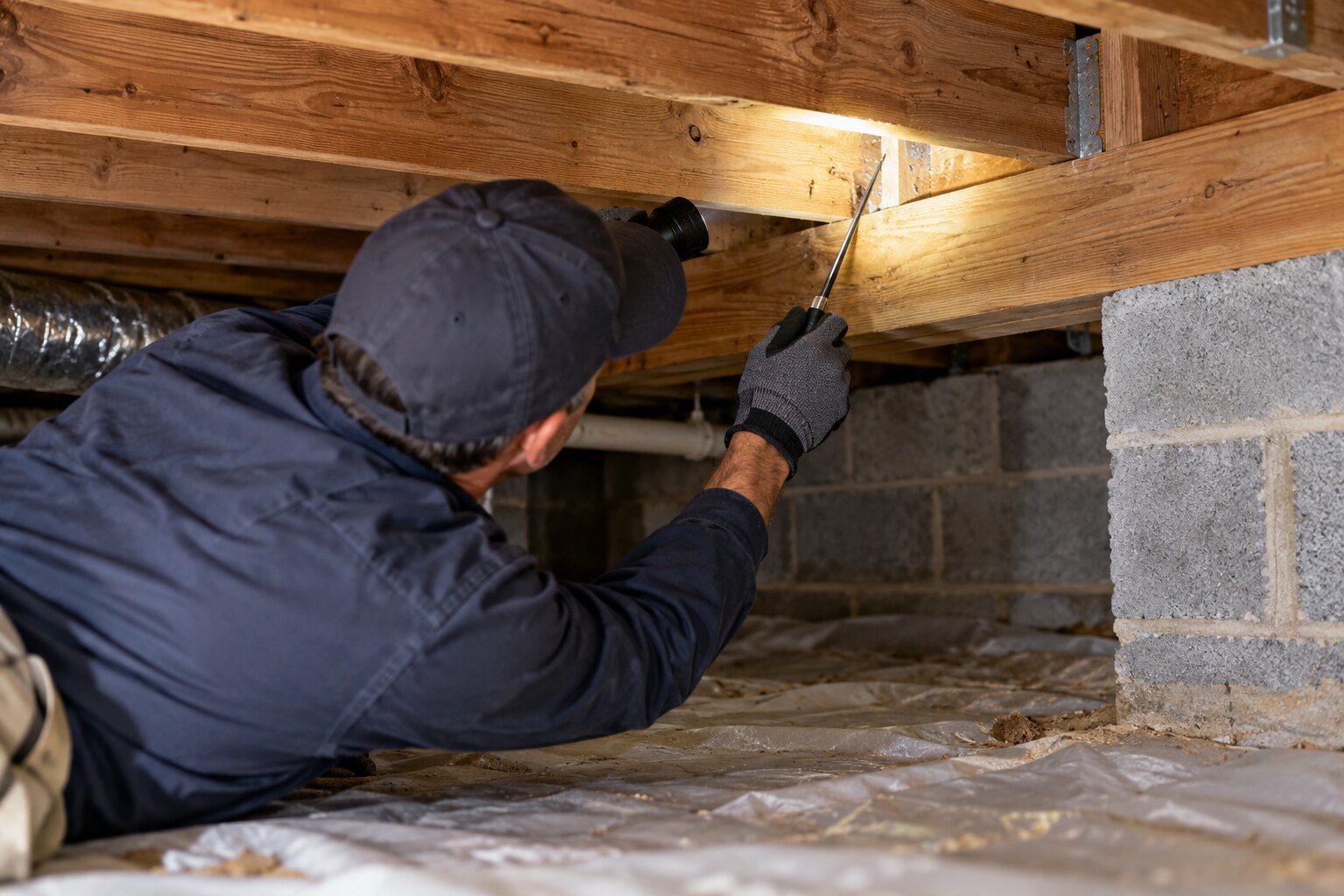
Southern Maryland homes often have crawlspaces, decks, porches, wood siding, mature trees and humid conditions. The Maryland Department of Agriculture regulates pesticide businesses and the official WDI report. A licensed WDI inspector addresses insect evidence; a contractor or engineer evaluates damaged framing; the lender decides whether treatment or repairs are conditions.
Start With the Choice the Client Must Make
A wood-destroying insect report may identify visible evidence of termites, carpenter ants, carpenter bees and reinfesting wood-boring beetles within the inspection scope. It does not automatically measure hidden structural damage or guarantee that inaccessible areas are clear. Buyers need to separate infestation, treatment, moisture source and repair scope. For The Riley Team, the client’s decision sets the research order. We identify the controlling source, then establish when that answer is needed.
Assemble the Evidence Before Discussing Terms
- Current Maryland Wood Destroying Insect Inspection Report and every attachment
- Prior treatment contracts, diagrams, warranties, renewals and service history
- Moisture, crawlspace, drainage and ventilation inspection findings
- Contractor or engineer scope for damaged joists, sill plates, beams, decks or other wood
- Invoices, permits and photographs for completed treatment and repairs
- Lender instructions for WDI clearance, treatment and repair documentation
One organized file gives everyone the same factual starting point. An item remains unresolved until the responsible source provides it.
Practical Clues Worth Investigating
- The report notes inaccessible areas that contain significant framing
- Mud tubes, frass, bore holes, shelter tubes or damaged wood are visible
- A transferable treatment warranty has lapsed or excludes the observed insect
- Wood-soil contact, leaks or poor drainage remain after treatment
- The parties assume treatment repairs structural damage
- The lender receives the report after the inspection negotiation is complete
Purchaser’s Action Plan
- Order the appropriate WDI inspection within the contract period.
- Read findings, inaccessible areas and inspector comments: not only the summary box.
- Ask whether evidence appears active, inactive, treated or indeterminate within the inspector’s scope.
- Obtain structural evaluation and repair pricing when damage is reported.
- Address moisture and wood-contact conditions that may support reinfestation.
- Coordinate treatment, repair and clearance evidence with the lender before settlement.
Owner’s Preparation Plan
- Locate treatment records and transferable warranty information.
- Correct leaks, drainage and wood-soil contact where appropriate.
- Provide access to crawlspaces, garages, attics and perimeter areas.
- Do not conceal or cosmetically cover damaged wood before evaluation.
- Use properly licensed pest professionals and qualified repair contractors.
- Disclose known infestation or damage accurately and retain completion records.
The Riley Team’s Contract Approach
Dawn divides the remedy into insect control, conducive conditions and structural repair. The WDI company should not be forced to certify engineering, and the carpenter should not declare the infestation eliminated. Contract language identifies each professional, scope, completion evidence, access and deadline. A broad credit is compared with the purchaser’s ability to complete work after settlement and the lender’s requirements.
A Huntingtown crawlspace inspection shows old-looking termite tubes and a softened sill area. Dawn does not treat an old warranty as proof that the framing is sound. She coordinates a licensed WDI inspection and a separate structural scope, then negotiates treatment and documented repair based on the two reports. The lender receives the evidence before the final underwriting evaluate.
Questions Southern Maryland Clients Ask
What insects are covered by Maryland’s WDI report?
The official form identifies termites, carpenter ants, carpenter bees and reinfesting wood-boring beetles as wood-destroying insects. Read the current form and inspector’s scope.
Is a WDI inspection the same as a general home inspection?
No. The WDI inspection focuses on visible evidence of listed insects under its scope. A home inspector may note concerns, but specialized licensing and reporting apply.
When does treatment repair damaged wood?
No. Treatment addresses insects. A qualified contractor or engineer must evaluate whether structural members need repair or replacement.
Under what circumstances may an inspector see insects behind walls?
Not necessarily. Reports identify accessible visible evidence and limitations. Inaccessible areas, finished walls and concealed framing may remain uncertain.
What does inactive evidence mean?
It generally means visible signs were not judged active at the inspection, but interpretation belongs to the licensed inspector. Prior treatment and hidden conditions still matter.
Who is allowed to perform a Maryland WDI inspection?
Use a properly licensed business and qualified individual under Maryland pesticide regulations. Verify credentials when the report will support a real estate transfer or loan.
Will homeowners insurance pay for termite damage?
Many standard policies exclude insect or gradual damage. A purchaser should ask the insurance producer about the actual policy rather than assume coverage.
Do VA or FHA loans always require a termite report?
Requirements depend on program, location, home or parcel and lender instructions. The lender should state what report, treatment or repair evidence is needed.
Should a owner treat before listing?
When there is known activity, early licensed evaluation may help. Do not treat blindly or cover damage; document the infestation, conducive conditions, treatment and repairs.
What records should transfer at settlement?
Provide the WDI report, treatment diagram and invoice, warranty and renewal terms, structural repair records, permits when required and lender-requested clearance.
Related RileyTeam.net Real Estate Guides
- Is This 1974 Rambler Modular or a Pre-HUD Mobile Home?
- Who Can Sign the Contract When a Maryland Estate Sells a Home?
- Should You Test a Southern Maryland Home for Radon Before Closing?
- Does the Fence Follow the Property Line? A Survey Checklist
- Who Repairs the Road? Private-Lane Questions Before You Buy
- A Flood Zone Is Only the Start: Documents Waterfront Buyers Need
- Can This Property Support an Accessory Apartment or Backyard Cottage?
- Is That Heating-Oil Tank Safe, Documented, and Insurable?
- The Appraisal Came In Low: What Evidence Belongs in an ROV?
For more about Dawn Riley’s experience and negotiation background, visit DawnRiley.net.
Sources Cited
- Maryland Department of Agriculture, official WDI inspection report
- Maryland Department of Agriculture, termites and ants
- Maryland Department of Agriculture, pesticide consumer information
- HUD Single Family Housing Policy Handbook
General real estate information only. Consult the appropriate legal, lending, tax, insurance, engineering or other licensed professional for the home or parcel.