
Published September 29, 2026
Is That Heating-Oil Tank Safe, Documented, and Insurable?

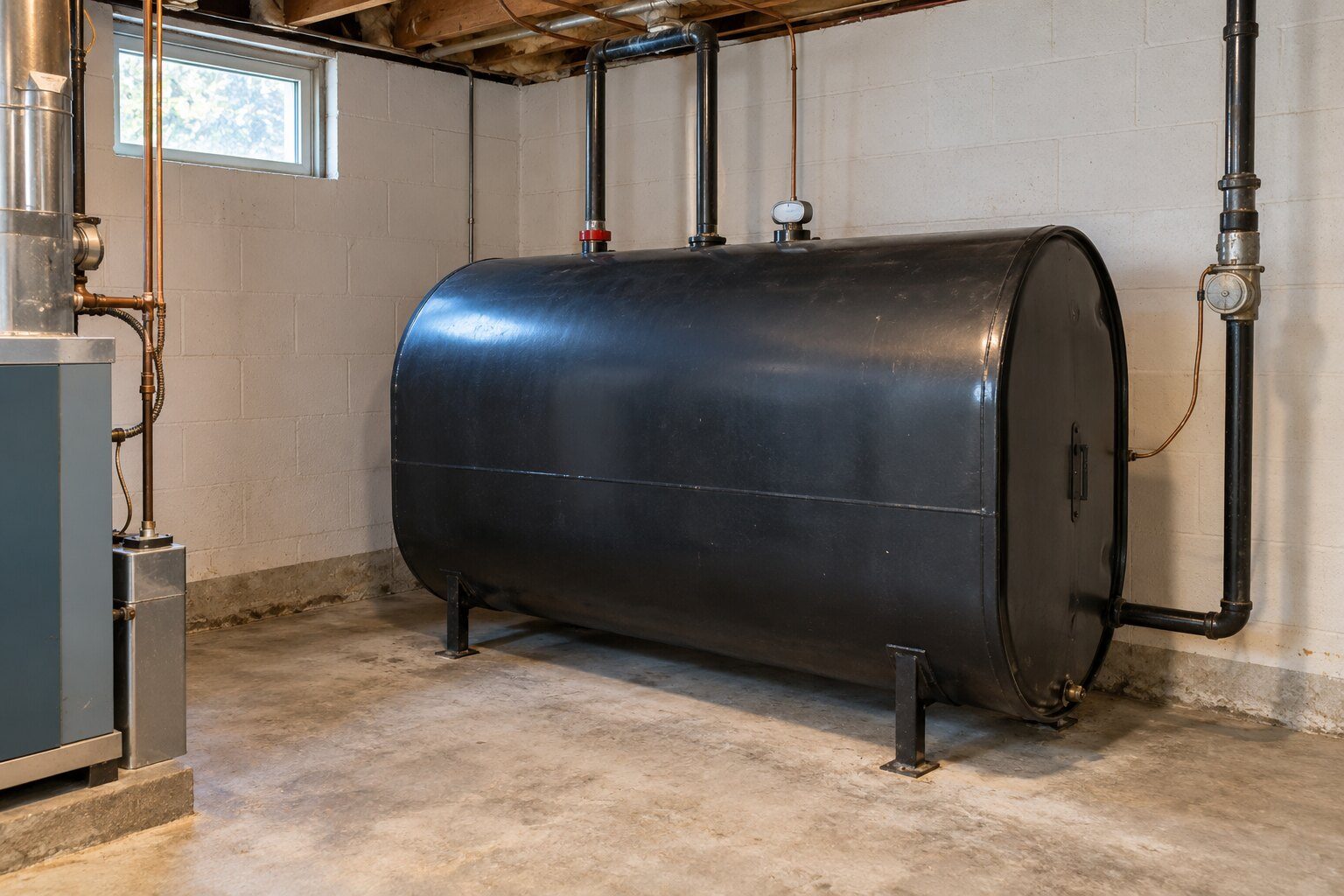
Older Southern Maryland homes may have basement tanks, exterior tanks, underground tanks or evidence of a former oil system after conversion to heat pumps. Maryland’s Oil Control Program oversees tank installation, maintenance and removal through certified professionals. A disconnected fill pipe or patch in the foundation is a clue, not proof of a clean removal.
Start With the Choice the Client Must Make
A heating-oil system is both a home mechanical system and a potential environmental issue. Buyers need to know whether a tank is aboveground or underground, active or abandoned, its age and condition, whether prior tanks were removed, and whether any release was reported and closed through the proper process. For The Riley Team, the client’s decision sets the research order. We identify the controlling source, then establish when that answer is needed.
Assemble the Evidence Before Discussing Terms
- Tank installation, replacement, inspection and service invoices
- MDE-certified removal or abandonment documentation and disposal receipts
- Release reports, sampling results, cleanup correspondence and closure documentation
- Heating service records, fuel-delivery history and tank warranty
- Insurance claims, environmental endorsements and current underwriting response
- Permits and contractor records for fuel conversion, fill and vent piping or removed equipment
One organized file gives everyone the same factual starting point. An item remains unresolved until the responsible source provides it.
Practical Clues Worth Investigating
- An exterior fill pipe remains but no active tank is identified
- The basement tank shows corrosion, staining, wet legs or unstable support
- A owner recalls an underground tank removal but has no contractor or sampling record
- The home or parcel has petroleum odor, stained soil or unexplained excavation
- Insurance will not bind until tank age or replacement is documented
- The parties discuss a credit before defining whether there is a release or regulatory duty
Purchaser’s Action Plan
- Identify every current and former tank location with the owner and inspector.
- Hire qualified professionals for tank and environmental evaluation within the contract period.
- Request MDE, contractor and insurance records before assuming a removal was clean.
- Ask the insurance producer about coverage and tank-age requirements.
- Coordinate any sampling or removal plan with the lender and title company.
- Distinguish the known tank condition from unknown soil or groundwater impacts.
Owner’s Preparation Plan
- Gather tank, fuel, removal and cleanup records before listing.
- Have visible leaks or unstable equipment evaluated promptly.
- Do not remove or abandon a tank through an unqualified contractor.
- Report a discovered release as required and follow agency guidance.
- Obtain a current insurance and service perspective before promising a remedy.
- Price the home with documented condition rather than hiding an unused oil system.
The Riley Team’s Contract Approach
Dawn separates three questions: Is there a tank? Is it structurally serviceable? Was there a release? Each requires different evidence and professionals. A fixed credit may work for a known replacement cost, but it is risky when environmental scope is unknown. Any removal or remediation agreement needs contractor qualifications, reporting, sampling, completion records and a clear deadline.
An older Owings home has a newer heat pump, but two capped pipes remain beside the driveway. Dawn does not describe them as an abandoned tank with no problem. She requests conversion and removal records, has the purchaser’s inspector document the evidence, and coordinates a qualified tank-location and environmental evaluate before the contract deadline.
Questions Southern Maryland Clients Ask
Are residential heating-oil tanks regulated in Maryland?
Yes, Maryland’s Oil Control Program has requirements and guidance for storage tanks, certified removers and reporting releases. The exact obligations depend on tank type, size and facts.
How may a purchaser tell whether an underground tank exists?
Records, visible fill or vent pipes, utility history, inspection and specialized locating methods may help. No single clue is always conclusive.
When does an unused oil tank have to be removed?
Requirements depend on the tank and condition. Maryland strongly recommends replacing older underground residential tanks, and removal must use an MDE-certified professional. Obtain home or parcel-specific guidance.
Who must report an oil release?
Maryland law and regulations may require the owner and contractor to report a discovered release. The qualified contractor and MDE should guide immediate steps.
Will a home inspection include environmental sampling?
Usually not. A general inspector may note visible evidence, but tank testing, soil sampling and cleanup assessment require specialized professionals.
Under what circumstances may homeowners insurance cover an oil leak?
Coverage varies widely by policy, endorsement and circumstances. Buyers and owners should ask their licensed producers in writing before relying on coverage.
Is a tank replacement credit enough?
Only when the scope is known and lender and insurer accept the plan. A credit for a tank does not resolve unknown contamination or regulatory obligations.
What records prove an old tank was removed properly?
Look for the certified contractor’s invoice, disposal record, site photographs, sampling results, release reporting and agency closure or related correspondence when applicable.
Under what circumstances may a owner convert from oil heat before listing?
Yes, but the old tank and piping still need proper closure, and the new system requires permits and documentation. Conversion does not erase prior environmental questions.
What should happen if petroleum odor or staining is found?
Stop guessing and contact qualified professionals. Preserve evidence, follow safety guidance, determine whether reporting is required and protect the transaction deadline.
Related RileyTeam.net Real Estate Guides
- Is This 1974 Rambler Modular or a Pre-HUD Mobile Home?
- Who Can Sign the Contract When a Maryland Estate Sells a Home?
- Should You Test a Southern Maryland Home for Radon Before Closing?
- Does the Fence Follow the Property Line? A Survey Checklist
- Who Repairs the Road? Private-Lane Questions Before You Buy
- A Flood Zone Is Only the Start: Documents Waterfront Buyers Need
- Can This Property Support an Accessory Apartment or Backyard Cottage?
- The Appraisal Came In Low: What Evidence Belongs in an ROV?
- Termites, Carpenter Bees, or Old Damage? Read the WDI Report Carefully
For more about Dawn Riley’s experience and negotiation background, visit DawnRiley.net.
Sources Cited
- Maryland Department of the Environment, residential heating oil
- Maryland Department of the Environment, Oil Control Program
- MDE, underground storage tanks
- MDE, aboveground storage tanks
General real estate information only. Consult the appropriate legal, lending, tax, insurance, engineering or other licensed professional for the home or parcel.